iXyber Asset Analyst
A unique system for monitoring and diagnosing the condition of technological equipment.
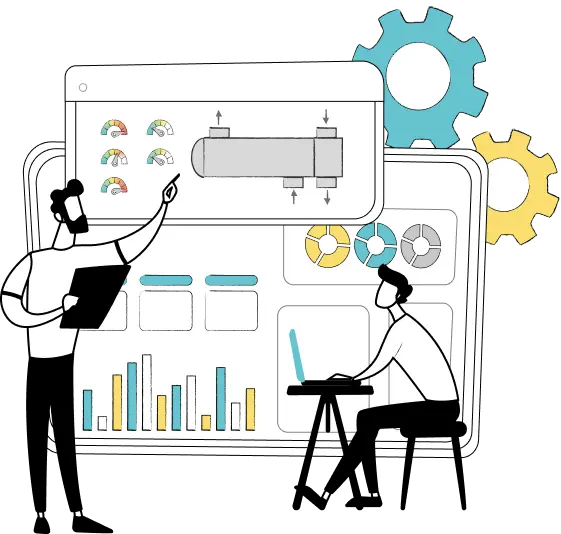
What's this for



As the Chief Engineer of the enterprise, I want to have comprehensive information about the condition of the technological equipment and how it ensures safety, reliability, efficiency, and environmental sustainability of production
As a Mechanical Technician, I want to see the overall picture of the equipment’s condition at the installation, analyze the status of each technological unit, and make operational decisions based on that

- Provides assessment and analysis of the technological equipment’s condition;
- Helps to identify deviations in a timely manner and reduce failure risks;
- Supports making both operational and strategic decisions;
- Allows prioritization of maintenance based on the criticality of the equipment’s condition;
- Creates a unified view of the production’s overall state.

Key advantages
- Integration of various DCSs into a unified monitoring and diagnostics system;
- Ready-made configuration templates for different classes of technological equipment, with options to adapt and create new templates;
- Comprehensive assessment of equipment condition across categories: safety, reliability, efficiency, and environmental friendliness, with the generation of a key equipment performance indicator;
- Flexible parameter settings for analyzing equipment condition based on automatic measurements, manual input, and mathematical models;
- Early detection of deviations, reduction of response time to incidents, and increased operational efficiency;
- Configurable fault diagnosis rules and processing of user-defined events;
- Support for system scaling from local installations to distributed production sites;
- Visualization and generation of analytical reports on the condition of technological equipment;
- Joint deployment with other application modules of the iXyber Platform (APC Runner, APC Analyst, PID Analyst, AE Analyst, etc.).


Methodology and principles
Methodology
The ASME (American Society of Mechanical Engineers) methodology forms the basis for monitoring.

Key monitoring principles
- Equipment condition is assessed according to categories: safety, reliability, and efficiency. For each category, individual indices are calculated, as well as an overall index based on them;
- Equipment condition is evaluated by severity. The response priority is calculated based on the severity of the condition and the criticality of the equipment;
- Monitoring is conducted by equipment unit, equipment class, and technological installation.
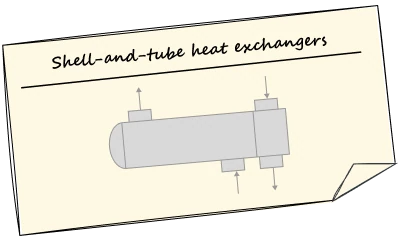
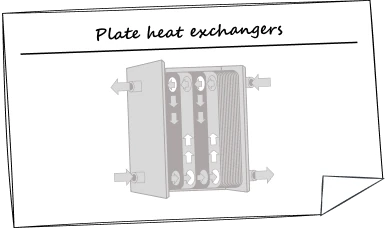
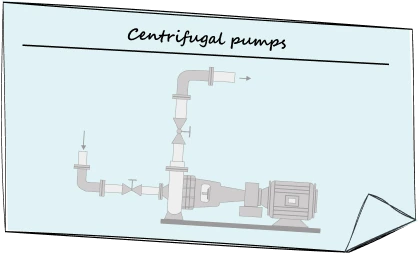



Monitoring at the process unit level
Aggregates assessment indicators at the process unit level and calculates overall condition indices of technological equipment within the process unit.
Dashboard
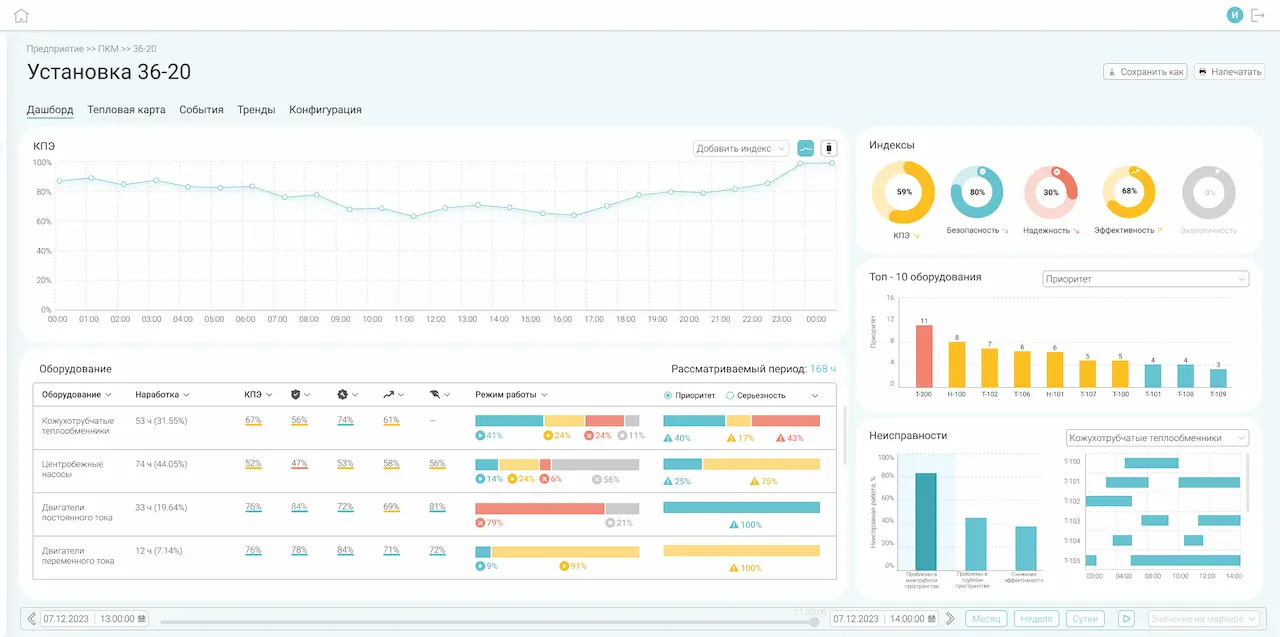

- Condition indices for the unit: current, trends, statistics;
- Top 10 pieces of equipment by a specified indicator (priority by default);
- Summary information by equipment type: indices, operating modes, work priority;
- Distribution of faults by equipment type.
- Condition indices for the unit: current, trends, statistics;
- Top 10 pieces of equipment by a specified indicator (priority by default);
- Summary information by equipment type: indices, operating modes, work priority;
- Distribution of faults by equipment type.
Heat map
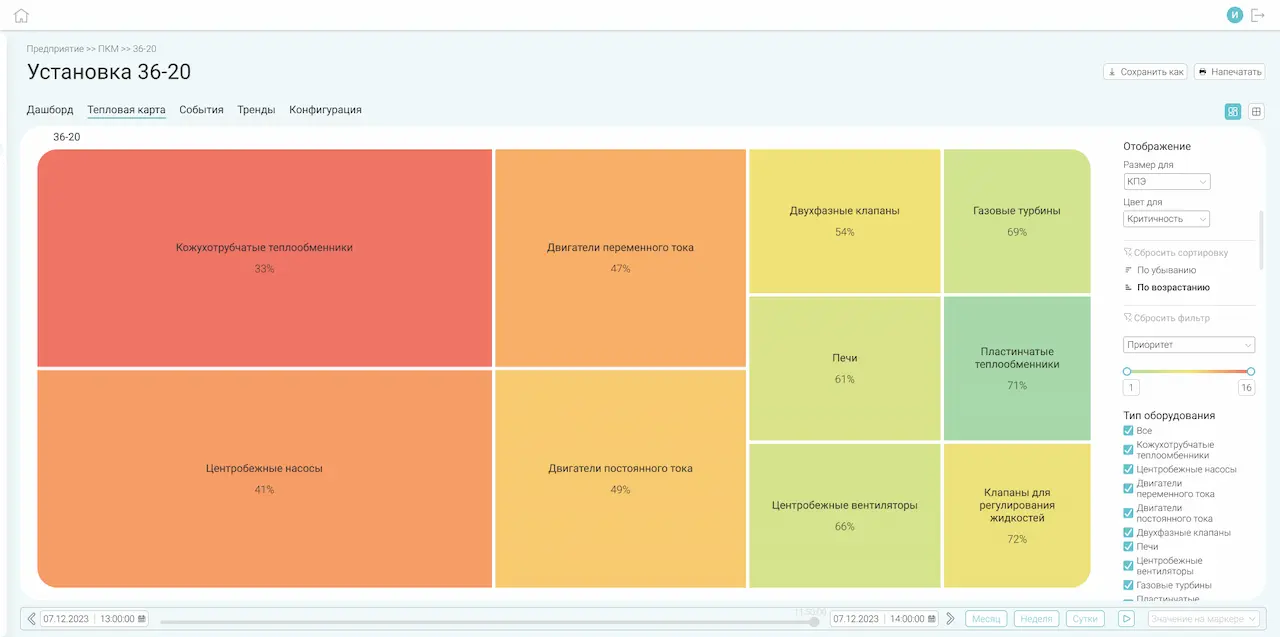
 Table view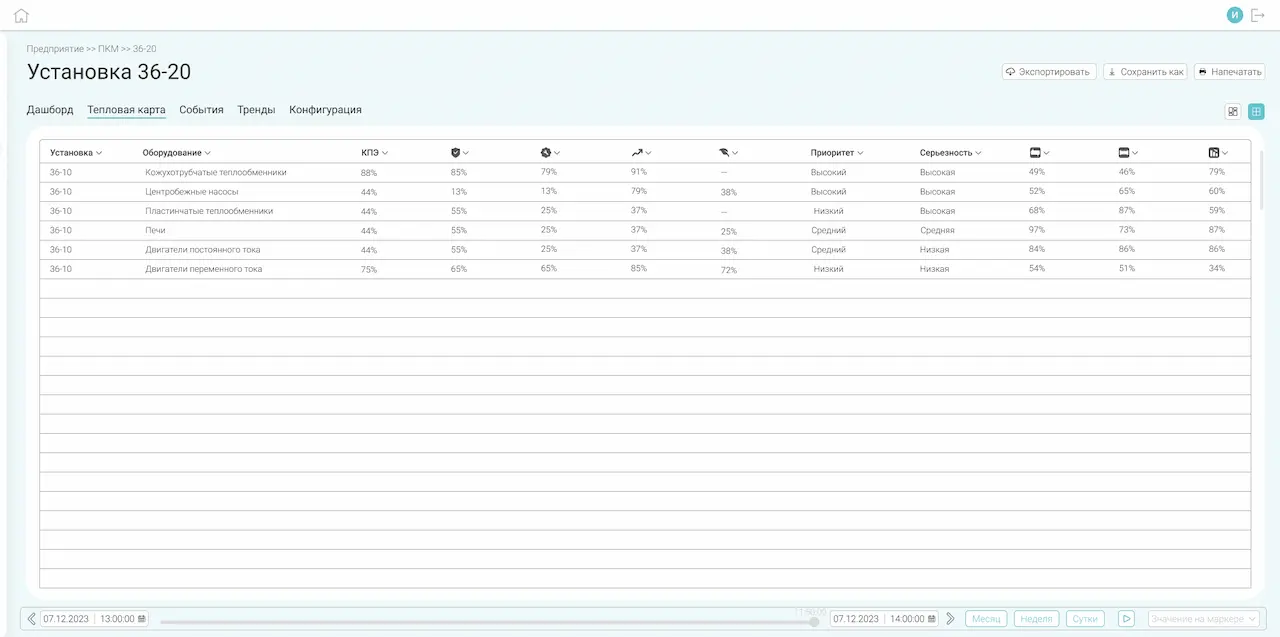
- Information encoding by color and size;
- Flexible sorting and filtering;
- Tabular view;
- Export of tabular data to CSV.
- Information encoding by color and size;
- Flexible sorting and filtering;
- Tabular view;
- Export of tabular data to CSV.

Monitoring at the equipment class level
Aggregates assessment indicators at the equipment class level and calculates generalized equipment condition indices for each class.
Dashboard
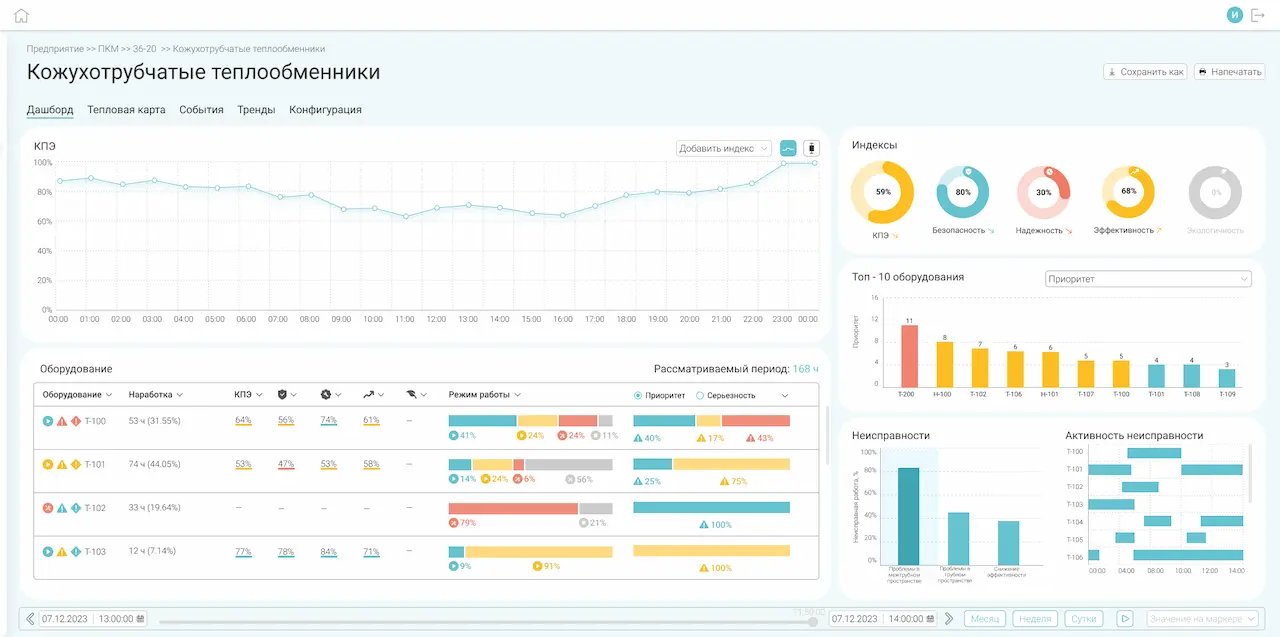
- Equipment class condition indices: current, trend, and statistics;
- Top 10 equipment units by a selected indicator (by default: priority);
- Equipment information: indices, operating modes, operating priority;
- Distribution of faults by equipment unit.
- Equipment class condition indices: current, trend, and statistics;
- Top 10 equipment units by a selected indicator (by default: priority);
- Equipment information: indices, operating modes, operating priority;
- Distribution of faults by equipment unit.
Heat map
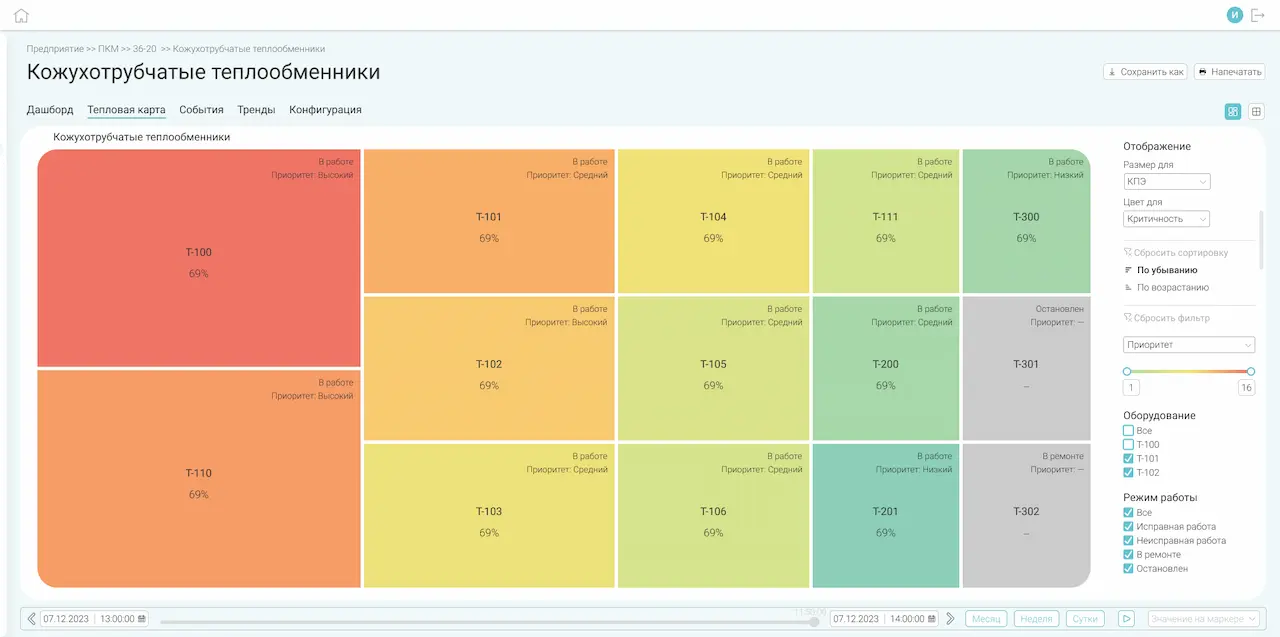 Table view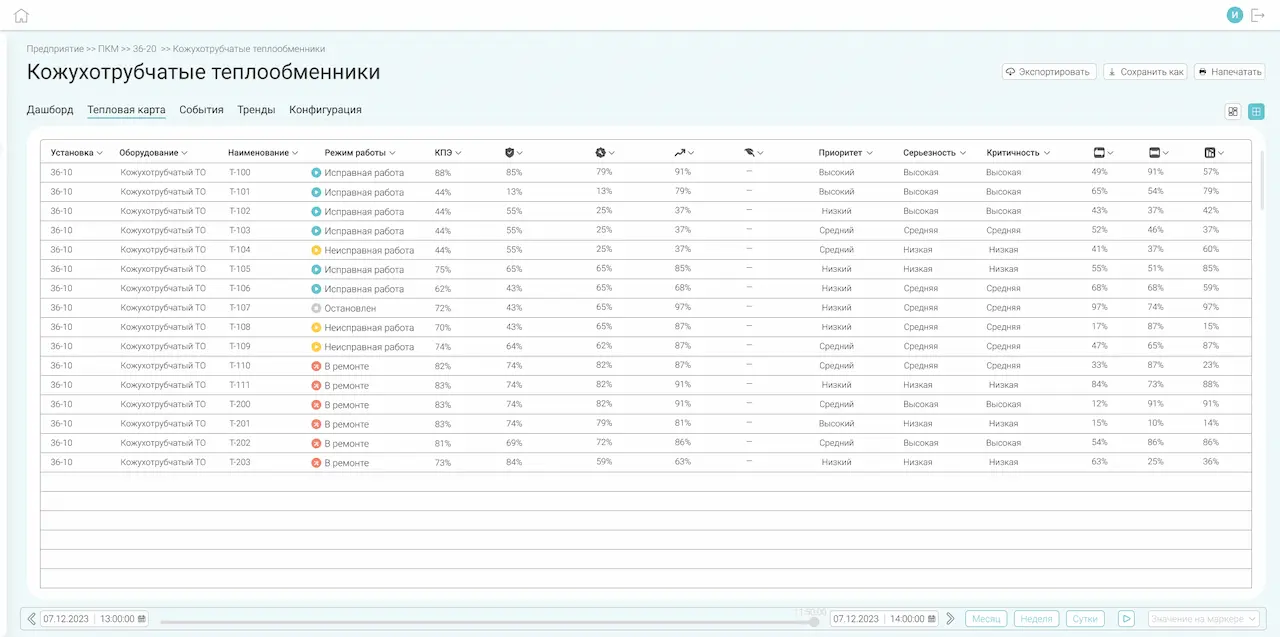
- Information encoding by color and size;
- Flexible sorting and filtering;
- Tabular view;
- Export of tabular data to CSV.
- Information encoding by color and size;
- Flexible sorting and filtering;
- Tabular view;
- Export of tabular data to CSV.

Monitoring at the level of technological equipment
Calculates metrics and condition assessment indices at the level of technological equipment.
Dashboard
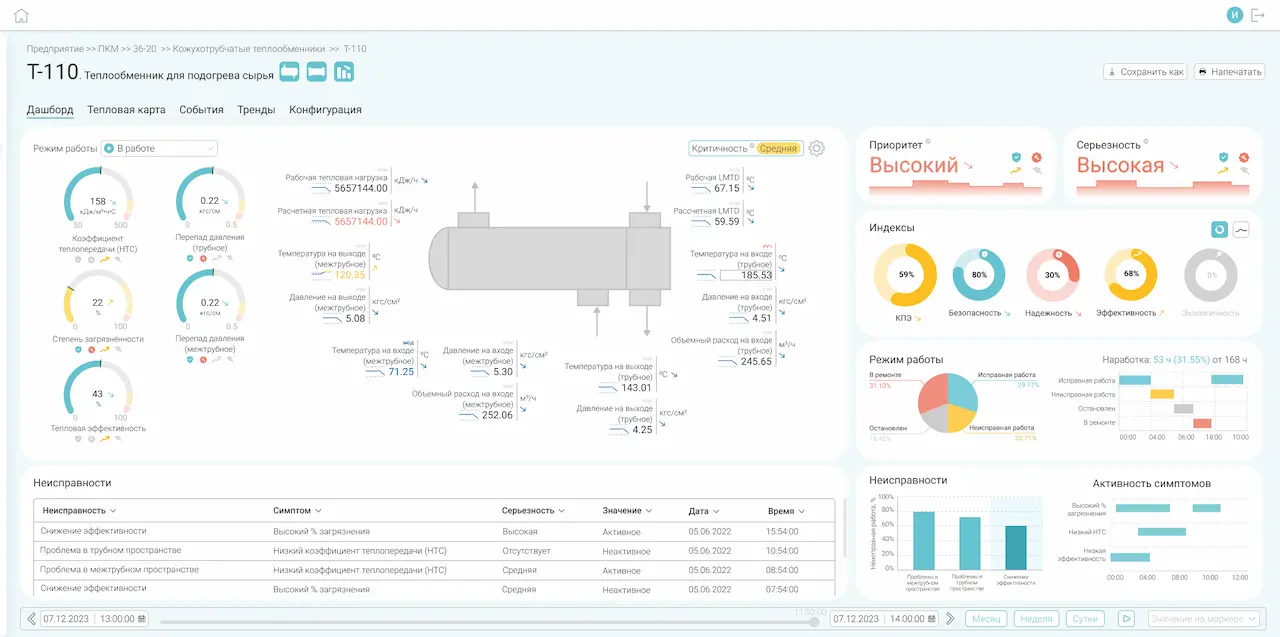
- Parameters, metrics, and condition indices of equipment – current values and trends;
- Distribution of operating modes;
- Faults and symptoms – statistics and dynamics, fault log.
- Parameters, metrics, and condition indices of equipment – current values and trends;
- Distribution of operating modes;
- Faults and symptoms – statistics and dynamics, fault log.
Heat map
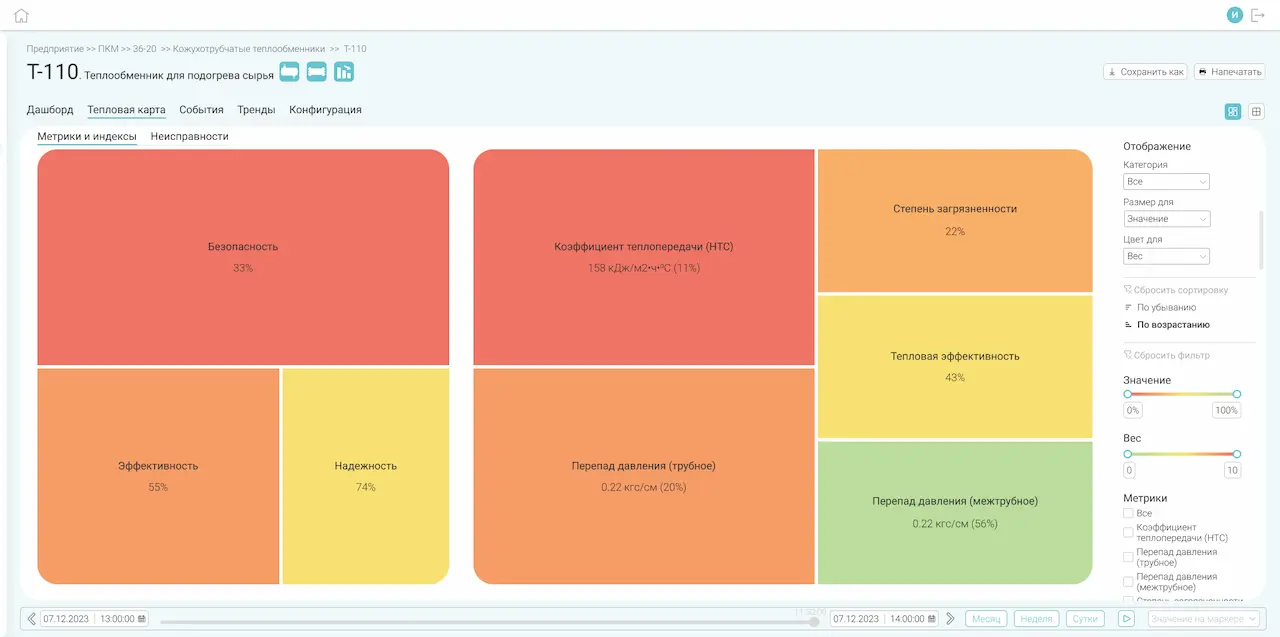 Table view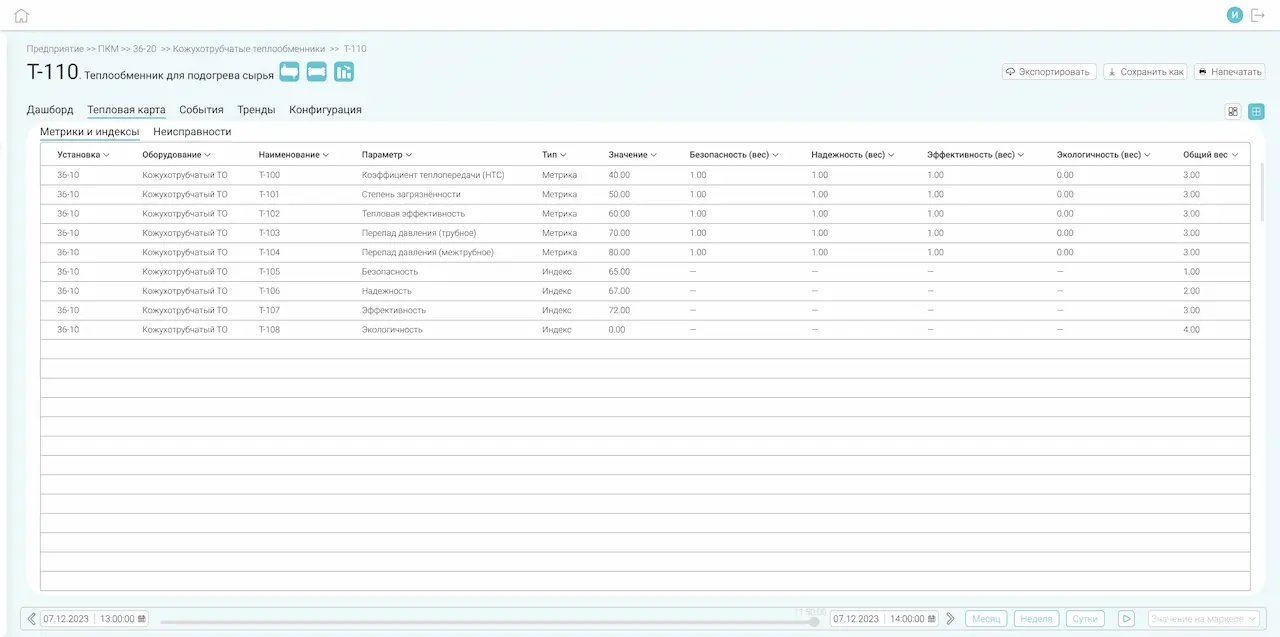
- Information encoding by color and size;
- Flexible sorting and filtering;
- Tabular view;
- Export of tabular data to CSV.
- Information encoding by color and size;
- Flexible sorting and filtering;
- Tabular view;
- Export of tabular data to CSV.

Events, trends, data export
Viewing and analysis of system events and historical trends, export of monitoring data for external processing.
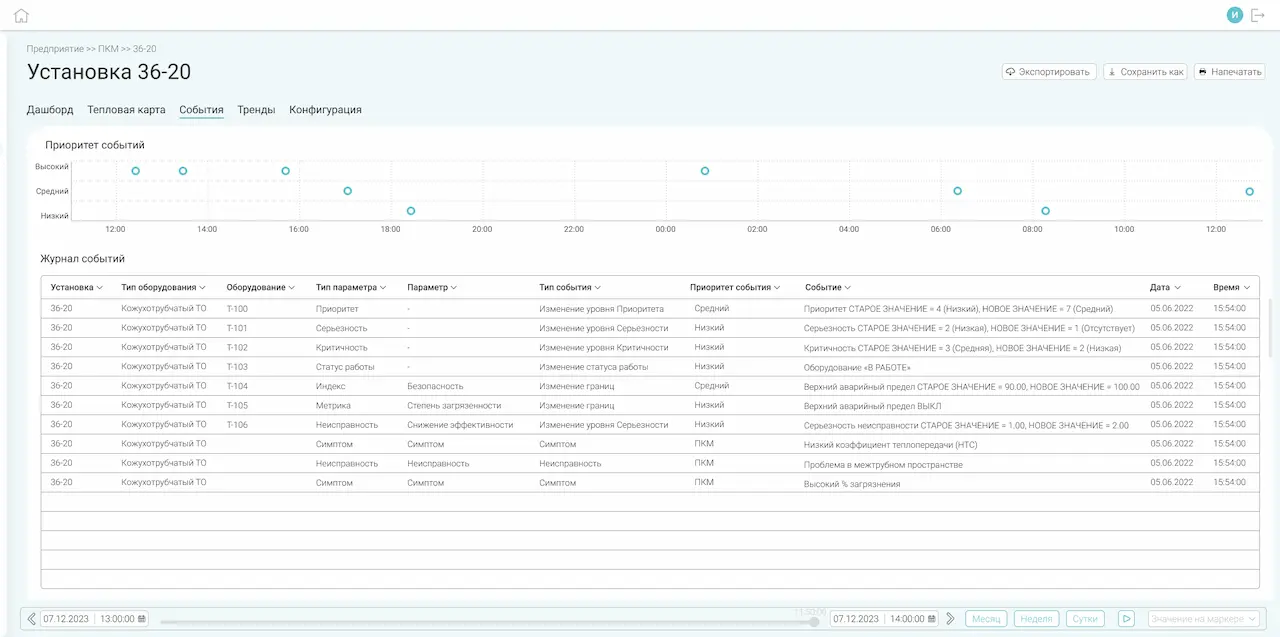
- Events: equipment status, system, and user events;
- Combined display of events in both chart and table views.
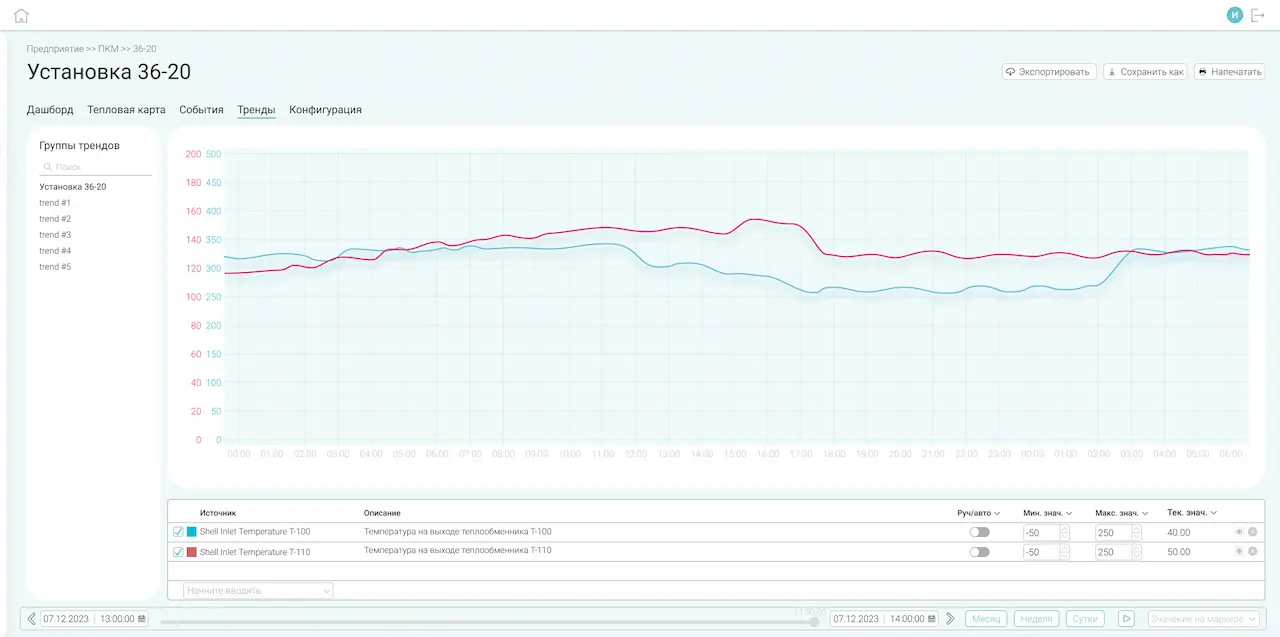
- Historical Trends:preset and user-defined trend groups;
- Export of event and trend data to CSV.
 Events: equipment status, system, and user events;
- Combined display of events in both chart and table views.

Equipment monitoring configuration
Equipment monitoring configuration through the system's user interface.
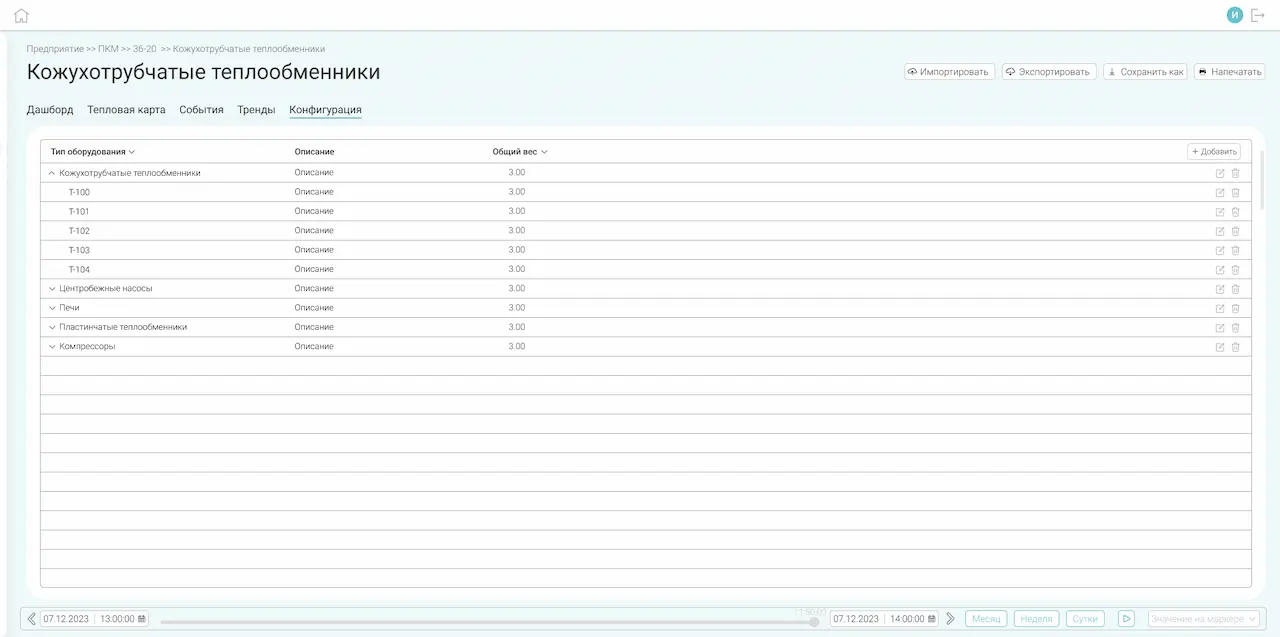
- Adding, deleting, and editing the configuration of equipment units;
- Initial automatic configuration of equipment units using templates.
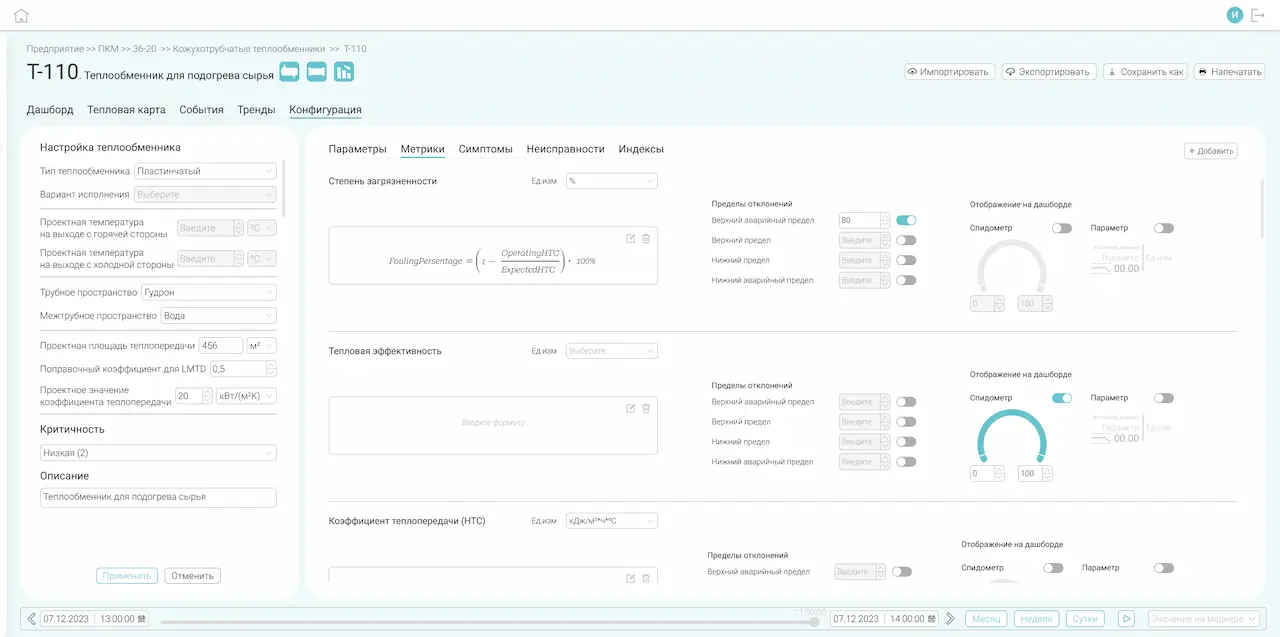
- Manual editing of equipment unit configuration from the user interface;
- Import and export of configuration via CSV.
- Adding, deleting, and editing the configuration of equipment units;
- Initial automatic configuration of equipment units using templates.
Case studies
Loading...